Ketamine therapy changed the landscape of depression care. For people with treatment-resistant depression, it offered relief where other treatments failed. But two challenges persist. Access remains difficult for many patients. And the effects, while rapid, often fade without repeated sessions.
New research addresses both problems. Oral ketamine tablets could replace IV infusions. And a combination therapy using buprenorphine could extend the benefits of a single infusion. These developments deserve your attention.
The Current State of Ketamine Therapy
Ketamine works differently from standard antidepressants. Most antidepressants target serotonin or norepinephrine. Ketamine targets the glutamate system. This difference explains its speed. Patients often feel relief within hours, not weeks.
For treatment-resistant depression, this speed matters. Standard medications fail for about one-third of patients. Ketamine provides an alternative when other options stop working.
But the delivery methods present problems. While IV infusions remain the gold standard they require a clinical setting. You need a healthcare provider present. You need repeated visits. Each session takes about 40 minutes. The cost adds up quickly.
Nasal sprays, like esketamine, offer more convenience. But they still require in-clinic administration. You cannot take them at home. You still need regular visits to a clinic.
These barriers prevent many people from accessing ketamine therapy. Rural patients face long drives. Working patients struggle with appointment schedules. Cost-conscious patients hesitate at the price.
Oral Ketamine Tablets: A Simpler Approach
Oral ketamine tablets solve the access problem. You take them at home. No infusion chair. No clinic visit. No needles.
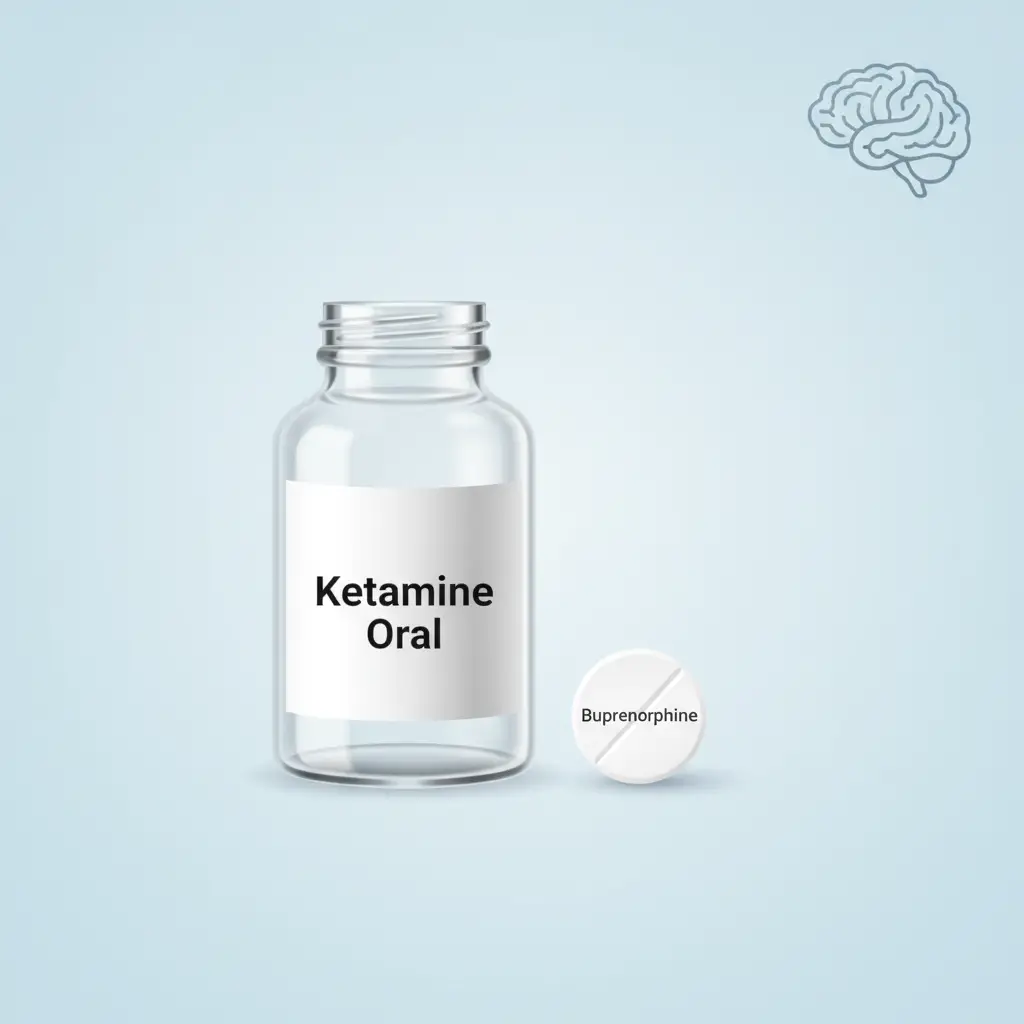
Recent clinical trials evaluated a novel oral formulation called KET01. This prolonged-release tablet delivers ketamine slowly over several hours. The slow release reduces side effects. It also provides more consistent blood levels.
The trial results require nuance. The primary endpoints were not met. That sounds discouraging. But cumulative evidence tells a different story. Patients in the oral ketamine groups showed relevant improvements. The effect was meaningful, even if the statistical targets were missed.
Why did the trials miss their primary endpoints? Several factors contributed. The placebo response was higher than expected. The dosing may need adjustment. The patient population varied widely.
Despite these challenges, oral ketamine shows promise. The improvements were consistent across multiple measures. Depression scores dropped. Anxiety improved. Quality of life increased.
What Oral Ketamine Means for You
If you struggle with treatment-resistant depression, oral ketamine offers a practical option. You avoid the logistical burden of clinic visits. You manage your treatment at home. You maintain your daily routine.
The tolerability profile also looks better. Patients report fewer dissociative effects. The prolonged-release format smooths the experience. You feel less of the "trip" and more of the therapeutic effect.
Access improves for underserved populations. Rural patients no longer need to travel to urban centers. Patients with transportation issues gain independence. Those with work constraints find flexibility.
The Buprenorphine Breakthrough
Access is only half the challenge. The other half is durability. Ketamine's effects fade. Without repeated dosing, symptoms return. This creates a treatment cycle that requires constant maintenance.
A significant new study offers a solution. Researchers tested a combination approach. They gave patients a single ketamine infusion. Then they added low-dose buprenorphine.
Buprenorphine is known for treating opioid use disorder. But it also has antidepressant properties. At low doses, it modulates the brain's stress response. It reduces inflammation. It supports mood regulation.
The results were striking. At four weeks, the ketamine plus buprenorphine group saw a 76% reduction in suicidal ideation. The ketamine plus placebo group saw only a 43% reduction. That difference is substantial.
This matters because no FDA-approved medication currently targets suicidal ideation specifically. Antidepressants help some patients. But they do not directly address suicidal thoughts. This combination therapy could fill that gap.
Why This Combination Works
Ketamine provides rapid relief. It acts within hours. But its effects taper off. The brain returns to its previous state.
Buprenorphine extends that relief. It maintains the antidepressant effect. It prevents the return of suicidal thoughts. The two medications work in complementary ways.
Ketamine targets the glutamate system. Buprenorphine targets the opioid system. Together, they address multiple pathways in the brain. This multi-target approach produces longer-lasting results.
For patients with suicidal ideation, this is life-changing. A single infusion plus a daily pill could provide weeks of protection. No repeated clinic visits. No constant monitoring. Just sustained relief.
Practical Takeaways for Patients
These developments are promising. But they are not yet standard practice. You should understand what this means for your care.
- Ask your provider about oral ketamine options. Some clinics now offer at-home protocols.
- Discuss buprenorphine as an add-on therapy. Your provider can assess if it fits your situation.
- Track your symptoms carefully. Data helps your provider adjust your treatment plan.
- Be patient with new treatments. Research moves slowly. Clinical adoption takes time.
- Consider the full picture. Ketamine is not a cure. It is a tool. You still need therapy, lifestyle changes, and support.
The research on oral ketamine and buprenorphine combinations is evolving. Early results are encouraging. But regulatory approval takes time. You should stay informed. You should ask questions. You should advocate for your care.
What This Means for Depression Care
The future of ketamine therapy looks different from today. Oral tablets will replace some infusions. Combination therapies will extend treatment benefits. More patients will access care. More patients will maintain their gains.
This shift matters for the broader mental health landscape. Treatment-resistant depression affects millions of people. Standard approaches fail them. Ketamine offers hope. The new formulations make that hope more accessible.
At The Practice in Jacksonville, FL, we follow these developments closely. We integrate evidence-based treatments into our holistic approach. We combine ketamine therapy with psychiatry, psychotherapy, and lifestyle interventions. We tailor each treatment plan to your specific needs.
The research on oral ketamine and buprenorphine represents a new chapter. It is not a revolution. It is an evolution. Small changes compound into significant improvements. Access improves. Outcomes improve. Lives improve.
If you live with treatment-resistant depression, you deserve options. You deserve treatments that work. You deserve treatments you can access. The new research moves us closer to that reality.
Talk to your provider. Ask about oral ketamine. Ask about combination therapies. Stay informed. Stay hopeful. The field is moving in your direction.